
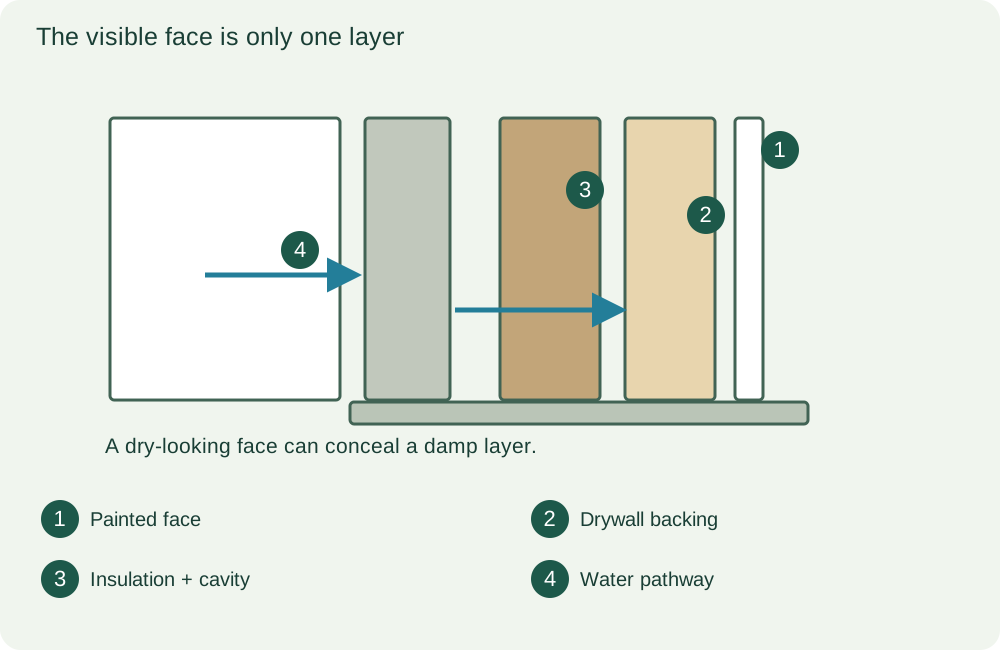
- Painted face
- Drywall backing
- Insulation + cavity
- Water pathway
What signs can suggest mold behind a wall?
Recurring water staining, peeling finishes, persistent musty odors and a known leak can point to a concealed moisture problem.
These observations have other possible explanations. A stain may record an old leak, paint may peel for reasons unrelated to mold, and an odor may come from another room or material. The strongest investigation connects the observation with a plausible water path and the affected assembly.
Distribution matters: a mark below a plumbing connection differs from recurring dampness along a below-grade wall. Neither observation defines the removal area on its own.
Why can mold grow behind clean-looking drywall?
The hidden side can stay damp while the room-facing surface looks dry.
Water may reach the cavity from a pipe, roof or exterior opening. Insulation and adjacent materials can retain moisture, while the painted face receives more room airflow. Enclosing that assembly with new finishes does not remove the moisture.
The water damage guide explains the difference between drying a surface and drying the layers behind it.
What can wall observations establish?
Observations help direct an investigation, but their limitations prevent a clue from becoming an unsupported diagnosis.
| Observation | Possible explanation | What remains unknown |
|---|---|---|
| Recurring stain | Water has reached the finish again. | Exact entry point and concealed extent. |
| Peeling paint | Moisture or another finish problem. | Whether growth exists behind it. |
| Musty odor | A damp or affected material nearby. | Which material or room is the source. |
| Elevated material reading | A moisture response at the measured location. | Whether mold is present. |
| Growth visible through an opening | Affected material at the observed spot. | The condition beyond the accessible view. |
How do professionals investigate a wall cavity?
They combine building observations with appropriate moisture measurements and, where justified, limited access or a borescope.
A moisture meter helps locate damp material. A thermal image can highlight a temperature pattern for follow-up. A borescope gives a small view through an opening. These methods complement each other; they do not establish the condition of the entire wall from one point.
If opening is needed, the purpose and work controls are determined before disturbing potentially affected material. The inspection-method comparison explains the boundaries of each technique.
Does a high moisture reading prove mold is present?
No. It indicates a moisture condition that needs interpretation for the instrument and material.
A wet area may not have developed growth, while an area that is now dry may have a history of damage. The reading should be tied to a location, substrate and the rest of the investigation.
Using a meter as a mold detector can lead to two errors: treating every damp patch as confirmed growth or assuming a dry reading proves all concealed material is clear.
Can painting over a stain fix hidden mold?
No. Paint does not clean an affected cavity or repair the source of moisture.
A new finish can hide a mark while the underlying assembly remains unchanged. Cleaning and drying come before repainting affected surfaces. Where material cannot be adequately cleaned, the work may involve removal and repair rather than cosmetic covering.
The basement wall guide shows how an interior finish and the masonry, framing and insulation behind it have separate treatment needs.
Does finding mold in one opening mean the whole wall must go?
Not automatically. The extent must be established from the findings and the accessible assembly.
An opening confirms only what can be examined there. Further access may be justified if the moisture path or visible damage extends beyond it. The removal boundary should follow that evidence, not the assumption that every hidden surface is either affected or clear.
Explanatory example
What if the wall is dry now but the odor returns?
A dry reading at one location does not settle the condition of every hidden layer. In this example, a prior leak affected the lower wall, and the odor returns near the same area. Inspection evaluates the prior water path and accessible material rather than choosing removal solely from the smell. Targeted access may resolve an uncertainty that another coat of paint would leave hidden.
Common questions
Can a camera see mold through drywall?
No. Thermal imaging shows temperature patterns, not mold. A borescope can show material reached through an opening, but only within its field of view.
Do I need to open the wall myself?
Opening potentially affected material can disturb particles and creates repair work. A professional investigation can determine whether access is justified and what protection is needed.
Can hidden mold be diagnosed from symptoms?
No. Symptoms do not locate or confirm a building source. Health concerns need medical advice; a building investigation evaluates the materials and moisture.
Sources and editorial approach
Gettysburg Mold Guide explains published building and cleanup guidance. This page was updated September 21, 2026. It is general information, not a property inspection or a medical assessment. The example explains a building condition; it is not a customer case study.