
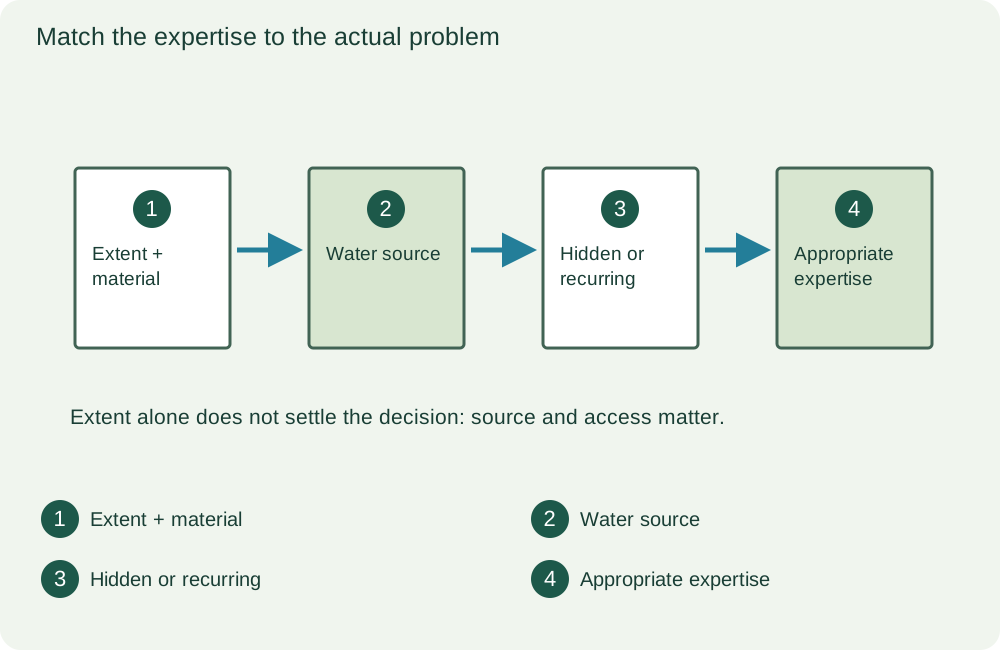
- Extent + material
- Water source
- Hidden or recurring
- Appropriate expertise
When can a homeowner handle a small mold area?
EPA says many areas smaller than about 10 square feet can be handled by homeowners, provided the broader circumstances are suitable.
This is not a medical safety threshold. A small visible mark may be connected to contaminated water, a concealed affected assembly or an HVAC problem. Those conditions change the decision.
Material also matters. An accessible hard surface differs from mold inside an absorbent finish. The material and process guide explains why cleaning is not appropriate for every affected item.
When does the water source make professional help important?
Sewage and other contaminated water require professionals experienced with that type of building damage.
The issue extends beyond visible mold. The water may introduce other contamination, and the condition of electrical systems and materials can affect safe access. This differs from treating a small, accessible surface with a known ordinary moisture problem.
For recovery after a leak or flood, the water restoration guide explains the sequence from source assessment through drying and repair.
Which response fits the situation?
Choose expertise that addresses the actual problem: moisture investigation, cleanup, HVAC work or building repair.
| Situation | Relevant expertise | Reason |
|---|---|---|
| Small accessible surface, ordinary moisture | Homeowner guidance may be suitable. | Extent, material and exceptions still matter. |
| Recurring or hidden growth | Experienced building investigation. | The source or concealed extent is unresolved. |
| Contaminated-water damage | Appropriately experienced restoration professional. | The water introduces additional cleanup concerns. |
| Suspected HVAC contamination | HVAC and remediation expertise as appropriate. | The system can connect affected and occupied spaces. |
| Deteriorated structural material | Qualified building or structural assessment. | Cleaning cannot restore lost strength. |
When is an investigation more useful than another cleanup?
Investigation is especially useful when growth returns, the source is unclear or the affected material is hidden.
Repeating a surface treatment can leave the reason for dampness unchanged. A recurring bathroom patch, a musty basement wall or a stain below a roof penetration may each need a different building investigation.
A mold inspection and a laboratory test are not the same service. The first need may be finding the water path rather than identifying a sampled deposit.
Which type of professional fits the problem?
Building investigators locate moisture and affected material; remediation contractors perform cleanup; other trades repair the relevant source or structure.
An HVAC specialist evaluates system components. Roofing or plumbing expertise may be needed for a confirmed leak. A structural concern requires appropriate building expertise rather than a larger cleaning package.
Some companies provide several services. The Gettysburg company directory distinguishes published services and coverage so that a business is matched to the type of work, not just a place name.
Do health symptoms establish that a home needs remediation?
No. Symptoms do not diagnose a building or locate its source; health concerns should be discussed with a health professional.
Building decisions should be tied to moisture, material and investigation findings. People with certain underlying conditions may need additional precautions around cleanup. CDC describes groups who should not participate in mold cleanup.
A sales claim about toxicity or mold color should not replace either a building assessment or medical advice.
Explanatory example
Why can two small patches need different responses?
The context can outweigh visible size. A small bathroom surface patch with an understood moisture cause is different from a similar mark beside an HVAC intake, and different again from staining after a sewage backup. In the second and third situations, system contamination or the water source creates reasons for professional involvement. These examples apply the decision factors without diagnosing any individual property.
Common questions
Does black mold always need a special package?
No. Color alone does not establish the organism, health effect or required work. The response depends on the affected material, extent and moisture conditions.
Does recurrence prove the whole home is affected?
No. Recurrence means the original cause or material condition deserves another look. The extent still needs evidence; a repeated spot is not proof of whole-house contamination.
Should New York mold rules be used for Gettysburg?
No. Gettysburg is in Pennsylvania. A rule or licensing requirement described for another state should not be presented as a local requirement. Any applicable local obligation needs its own current source.
Sources and editorial approach
Gettysburg Mold Guide explains published building and cleanup guidance. This page was updated September 21, 2026. It is general information, not a property inspection or a medical assessment. The example explains a building condition; it is not a customer case study.