
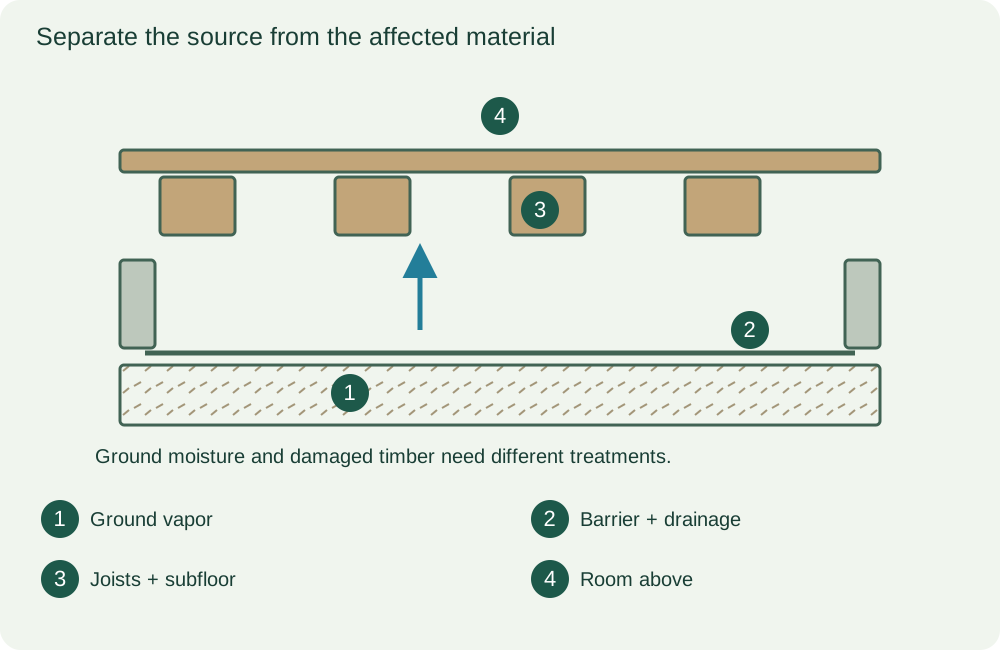
- Ground vapor
- Barrier + drainage
- Joists + subfloor
- Room above
Why does mold grow beneath a house?
Damp soil, water leaks and humid air can keep crawl space materials wet enough to support mold.
Ground moisture can enter an unprotected space as water vapor, while drainage or plumbing problems introduce liquid water. Cold surfaces can collect condensation when humid air reaches them. These conditions can affect the underside of the floor even when the room above appears normal.
Access matters: insulation, low clearance and stored material can conceal parts of the subfloor and framing. A finding near the hatch does not establish the condition of every bay.
What happens during crawl space mold remediation?
The work moves from source and material assessment to controlled cleaning or removal, drying, and then the appropriate moisture repairs.
Accessible joists and subfloor are assessed separately from insulation and debris. Unsalvageable material is removed with controls suited to the space. Sound, accessible framing may be cleaned, while damaged structural material requires a separate building assessment.
Moisture-control improvements are selected for the actual source. A barrier is installed as part of an appropriate moisture strategy, not as a way to conceal untreated material. The containment guide explains why work controls and cleaning equipment have different jobs.
What does each part of a crawl space project do?
Cleaning, water removal and vapor control solve different parts of a crawl space problem.
| Work or component | Main purpose | Important boundary |
|---|---|---|
| Framing and subfloor cleaning | Remove growth from salvageable surfaces. | Does not repair decayed or weakened wood. |
| Insulation removal | Expose and remove material that cannot be cleaned. | Replacement comes after cleanup and drying. |
| Ground vapor barrier | Reduce water-vapor transfer from soil. | Does not pump out standing water. |
| Drainage and sump system | Collect and discharge liquid water. | Does not clean the joists. |
| Dehumidification | Manage water vapor in the crawl space air. | Does not stop a pipe leak. |
Is encapsulation the same as mold removal?
No. Encapsulation generally describes enclosing or isolating the crawl space from moisture sources; remediation addresses affected material.
A ground vapor barrier reduces moisture transfer from soil. A coating applied to wood is a different product with a different purpose. Neither term should be treated as proof that cleaning, insulation removal or structural repair has happened.
The order is important. Existing affected materials and water problems need assessment before a new barrier or finish makes them harder to reach. See the basement moisture guide for the distinction between drainage, vapor control and dehumidification.
Does mold on a floor joist mean the wood is rotten?
No. Surface growth does not by itself establish decay or loss of strength.
Wood condition must be evaluated independently. Soft, damaged or deteriorated framing raises a structural question that cleaning cannot resolve. Conversely, replacing sound framing solely because a surface is discolored can be unnecessary.
Staining, active growth and structural damage are separate findings. A professional assessment should connect each finding to a location and material, especially where the floor above is sagging or an existing repair conceals the original wood.
Can wet crawl space insulation stay in place?
It depends on its material, condition and whether it can be adequately dried and cleaned.
Insulation can conceal the subfloor and hold moisture against adjacent materials. A surface-only inspection from below may miss those interfaces. Moldy absorbent material that cannot be cleaned needs removal rather than a coating on its visible face.
Replacement insulation belongs after the water source, affected surfaces and drying have been addressed. A newly installed layer should not hide an unresolved problem.
Why can mold return after encapsulation?
A barrier cannot compensate for a continuing leak, drainage failure or untreated affected material.
For example, a plumbing leak above a ground barrier still wets the underside of the floor. The repair must follow that source. Recurrence is a reason to reassess the system and materials, rather than assuming a stronger chemical or a larger dehumidifier will solve every case.
Explanatory example
What if there is mold above an existing ground barrier?
An existing barrier does not rule out an overhead leak. In this example, a leaking drain wets insulation and the adjacent subfloor. The response follows the drain, affected insulation and wood condition. Replacing the entire ground barrier would not repair the leaking pipe. The scenario shows why the water source and material findings must be connected.
Common questions
Should I enter a tight crawl space to inspect it?
An unsafe or confined space requires appropriate professional assessment. Limited clearance, wiring, standing water or damaged framing can create hazards unrelated to mold. Inspection limitations can be recorded without entering an unsafe area.
Does cleaning include structural repairs?
Cleaning and structural repair are different tasks. Where wood condition raises a structural concern, that assessment and any repair should be resolved before the assembly is enclosed again.
Sources and editorial approach
Gettysburg Mold Guide explains published building and cleanup guidance. This page was updated September 21, 2026. It is general information, not a property inspection or a medical assessment. The example explains a building condition; it is not a customer case study.