
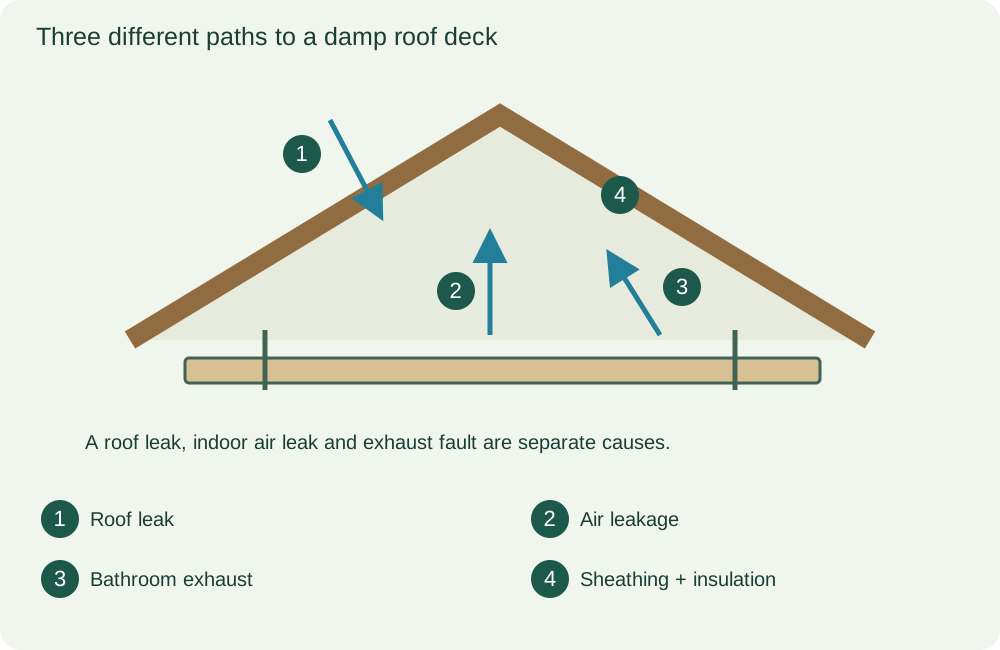
- Roof leak
- Air leakage
- Bathroom exhaust
- Sheathing + insulation
Can condensation cause attic mold without a roof leak?
Yes. Moist indoor air can condense on cold attic surfaces even when rain is not entering through the roof.
Air escaping around penetrations can carry moisture from the occupied rooms into the attic. A bathroom exhaust duct that ends inside the attic adds another moisture source. Roofing defects, by contrast, let water enter from outside. Each mechanism calls for a different correction.
The distribution and timing of dampness help guide an investigation. Broad staining and a local mark beneath a penetration should not automatically be assigned the same cause.
How are roof sheathing and rafters treated?
Accessible, sound wood may be cleaned, while deteriorated or otherwise unsalvageable material requires a different repair decision.
Assessment separates surface growth from the condition of the board or member. Cleaning methods depend on the substrate and the extent of the work. A coating does not replace removal of growth or correction of damp conditions.
Roof sheathing is part of a roof assembly; rafters support it. Where condition raises a structural concern, a qualified building professional evaluates the repair. The remediation guide separates cleaning from reconstruction.
How do attic materials change the remediation work?
Sheathing, framing, insulation and ventilation components have different roles and must be assessed separately.
| Finding or material | Relevant work | Separate question |
|---|---|---|
| Roof sheathing surface growth | Assess board condition and clean salvageable surfaces. | Is roofing or sheathing repair also required? |
| Rafters or trusses | Assess and treat accessible material. | Is there structural deterioration? |
| Wet or affected insulation | Evaluate removal, drying and replacement. | Is the adjacent ceiling assembly affected? |
| Exhaust ending in the attic | Correct the exhaust route appropriately. | Which materials were already affected? |
| Air leakage from below | Investigate and correct the moisture-carrying pathway. | How does the whole assembly manage heat and moisture? |
Does attic mold require a new roof?
Not automatically. A roof replacement decision depends on the roof’s condition and the source and extent of damage.
If the moisture comes from an interior air leak or a wrongly routed exhaust, replacing roof covering alone may leave that source unchanged. If roof material is leaking or damaged, roofing work may be needed alongside cleanup.
The same distinction applies to ventilation. Adding vents without understanding air movement and the roof assembly is not a universal cure. The solution must address how moisture enters and leaves the particular space.
What happens to affected attic insulation?
Insulation is assessed for contamination, moisture and whether it can be adequately cleaned or dried.
Absorbent material that cannot be cleaned may need removal. This can also provide access to surfaces concealed beneath it. Replacement comes after the relevant source repairs and cleanup, rather than covering an unresolved damp area.
Insulation and air sealing serve different functions. Restoring insulation does not automatically seal a leakage path from the living space, and correcting an exhaust route does not remove growth already on adjacent sheathing.
How is attic work kept separate from occupied rooms?
The access route, containment and debris handling are planned to limit transfer from the attic into the home.
An attic hatch may open directly into a hallway or closet. Moving insulation or removing damaged finishes can disturb dust. Protection of that route matters as well as the treatment at the roof deck.
A HEPA vacuum cleans surfaces; air filtration handles airborne particles. These functions are explained in the HEPA and containment guide. Neither demonstrates that the moisture source has been repaired.
Explanatory example
What if staining appears beside a bathroom exhaust duct?
The duct route is a relevant lead, not proof of the cause. In this example, inspection finds the exhaust ends inside the attic and adjacent surfaces are damp. Correcting the discharge route addresses the source; the affected wood and insulation still need their own cleanup decisions. If the roof is otherwise sound, that finding alone does not justify replacing the whole roof.
Common questions
Does dark attic staining prove active mold?
No. A stain is an observation, not a complete diagnosis of current moisture or material condition. Assessment considers the surface, moisture history and affected assembly. Cosmetic discoloration may remain after effective cleaning.
Is a white coating proof of successful remediation?
No. A coating shows that a finish was applied. It does not establish what was cleaned, whether concealed materials were evaluated or whether the moisture source was corrected. Completion depends on the work and remaining conditions.
Sources and editorial approach
Gettysburg Mold Guide explains published building and cleanup guidance. This page was updated September 21, 2026. It is general information, not a property inspection or a medical assessment. The example explains a building condition; it is not a customer case study.