
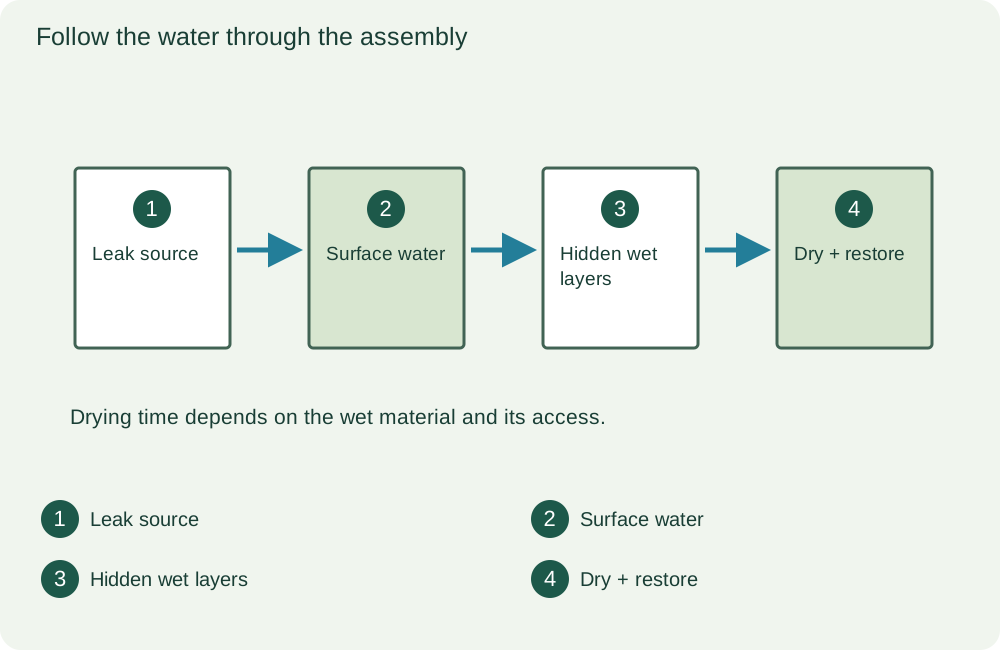
- Leak source
- Surface water
- Hidden wet layers
- Dry + restore
How are water restoration and mold remediation different?
Water restoration addresses water and drying; remediation addresses mold-affected material and contamination controls.
A recently wet room does not automatically require mold removal. Conversely, simply placing drying equipment in a room with established growth is not a complete cleanup plan. Assessment determines what materials are wet, what is salvageable and what additional work is needed.
Reconstruction is a further stage. It can include replacing insulation, drywall or flooring after the affected assembly has been dealt with. The process guide explains these boundaries.
What should happen first after a leak or flood?
The first priorities are safe access, stopping the source where feasible, and assessing the water and materials before extraction and drying.
Standing water, damaged wiring or an unstable surface can make entry unsafe. Sewage or other contaminated water needs appropriately experienced professional handling. A clean supply-line leak and a sewage backup cannot be treated as interchangeable cleanup situations.
Once the source and conditions are assessed, extraction removes accessible water. Drying then addresses moisture retained in building materials. A repaired pipe stops new leakage, but it does not dry the wall behind it.
How do the stages of recovery fit together?
Source control, extraction, drying, remediation and rebuilding are connected stages, but not every water incident needs every stage.
| Stage | Physical work | Relevant result |
|---|---|---|
| Source and safety | Assess the incident and stop continuing water where possible. | The source and access risks are identified. |
| Extraction | Remove accessible standing water. | Less free water remains. |
| Material assessment | Examine finishes and concealed layers where appropriate. | Salvageable and affected areas are identified. |
| Drying and remediation | Dry retained materials; clean or remove affected material. | The work addresses the assembly, not just the visible face. |
| Review and repair | Evaluate completion, then restore finishes. | Remaining work is distinguishable from completed cleanup. |
What does the first 24-48 hours mean for mold?
Prompt drying can reduce the chance of growth; 24-48 hours is a prevention reference, not a precise deadline after which every material becomes moldy.
EPA emphasizes drying wet items quickly. Material, water exposure and hidden layers all affect the outcome. Carpet backing and padding need attention as well as the visible pile.
A photograph taken after the surface dries cannot establish how long a concealed layer stayed wet. Delayed discoveries require investigation of the actual material condition, rather than a decision based on the calendar alone.
Why can a floor or wall look dry while damage remains?
The exposed surface can dry faster than the materials underneath or behind it.
Water can move into a wall cavity, under flooring or into insulation. Those layers may have less airflow than the room-facing surface. The drying plan must account for the assembly rather than just indoor air conditions.
Material readings and access findings help evaluate progress. The inspection guide explains why a moisture reading is useful without being a mold test.
When can damaged finishes be rebuilt?
Rebuilding follows necessary cleanup, source correction and a review that the relevant materials are sufficiently dry for the assembly.
There is no single room-wide drying time that applies to every material. A new wall finish can hide a damp cavity and make later access more difficult. Remaining repair work should be distinguished from unresolved moisture or cleanup.
The completion record connects the work area, treatments, material condition and any remaining repairs. Our containment guide explains why final cleaning and material replacement are separate stages.
Explanatory example
What changes if water reaches both carpet and wall insulation?
Both assemblies need assessment. In this example, a supply leak wets a carpet edge and the bottom of an insulated wall. Extraction from the carpet does not dry the insulation. Assessment follows both paths, and the treatment depends on the condition and cleanability of each layer. The purpose is to avoid repairing the visible room while leaving a damp concealed assembly.
Common questions
Does every leak lead to mold?
No. Prompt and effective drying can prevent growth in many situations. The actual outcome depends on the material and exposure. A leak history is a reason to assess affected areas, not proof that an entire home needs remediation.
Does running fans remove mold?
No. Air movement can help appropriate drying work, but it does not remove existing growth or make contaminated water safe to handle. Disturbance can spread particles, so mold-affected work needs suitable controls.
Sources and editorial approach
Gettysburg Mold Guide explains published building and cleanup guidance. This page was updated September 21, 2026. It is general information, not a property inspection or a medical assessment. The example explains a building condition; it is not a customer case study.